
Stopping the Cycle: How Imago for Individuals Helps You Break Negative Relationship Patterns
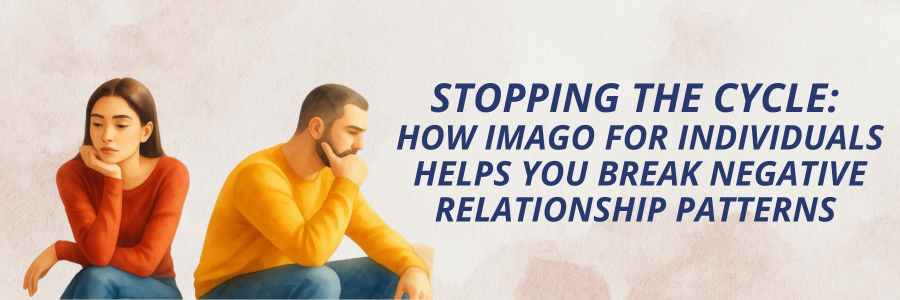
Have you ever courageously asked the question,
“What is it like to be in relationship with me?”
So many of us have a revolving history of hurt with our significant others. Maybe you have had several partners in a row that were self-centered or never took you seriously. Maybe you find yourself repeating the same arguments with different people and wonder why you can’t find someone who can really see you and care for you.

It can make us wonder, is there something wrong with my “picker”?
Am I repeating these patterns because I am bad at choosing partners?
Perhaps we should consider that there is something else at play.
We are often very good at turning our analyzing gaze on others. Some of us are experts at the game of guessing, assuming, and convincing ourselves that we know exactly what someone else is thinking or feeling. Then, we make decisions about how we should be with these people based on the story we have told ourselves.
We think, “He wants me to be…”, “She needs me to be…“ ,”I know they want… “ Any of these sound familiar?
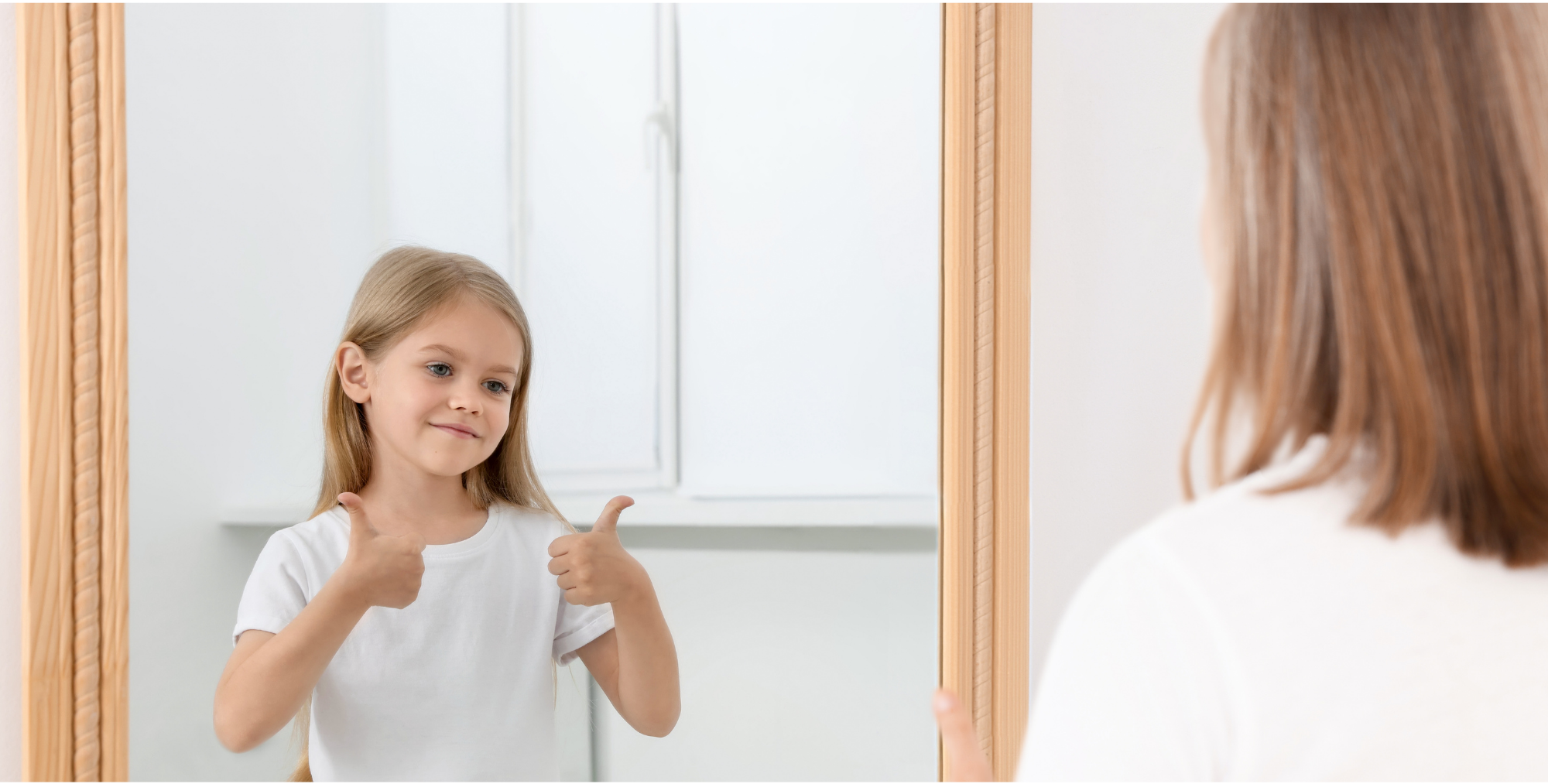
As small children, having the ability to figure out what the caretakers in our lives wanted was the key to our survival. Our experiences with them informed when it was safe to move closer and ask for help or connection. It also informed when we needed to create distance and how we processed the experience of disconnection from the adults in our lives.
Consequently, we trained ourselves to watch others carefully and act accordingly. Unfortunately, our lens for what we were noticing was immature and survival based. As adults, in order to have a successful, healthy relationship, we need to adjust our relational lens into something more intentional.
Reversing the Gaze

One way to develop our relational lens is to reverse the gaze and focus our attention on self-reflection. Finding the time, energy, and ability to look inward, to ask ourselves important questions, and to be willing to see ourselves as others see us, can be transformative. These are not skills that most of us learned or saw from others.
How many of us as children had an adult say “ You know, I made a mistake there. I caused you pain because I wasn’t thinking about the consequences of what I was doing. A better way I could have handled that might have been to…” ?
Many of us did not have this experience modeled for us as children. Instead we saw the adults in our lives tell us that it was their way or the highway, and rarely modeled what it looked like to repair a situation when we were hurt.

Our learnings about how to be in relationship were programmed by our experiences in early childhood. We had to figure out what it took to get along with our siblings, our parents, and all those other significant people who could make our lives good or make our lives bad. Many of us did not learn great relationship skills in childhood because the skills were never modeled or taught to us.
How could we know that we were creating a blueprint for the future?
Working With The Blue Print
It turns out that relating well requires skills, more awareness and intention. It requires us to figure out ways to be our most authentic selves and to receive love well from others. We have to learn how to really listen and pay attention. We need to transfer our hurt and frustrations into effective communications that make our lives better and more pleasurable. We want our intentions and our impact to match up. We need to learn how to ask well for what we want. We must learn to make good repairs when we mess up or hurt someone else.
We need to know what it is like to be in relationship with us.

Good relationships require us to listen to the stories we tell ourselves and consider them from a new and adult perspective. We need the skills to engage one another in communication that allows us to understand where the other person is coming from and our impact on the relationship.
Along with learning about our impact on others, receiving love turns out to be one of the most difficult challenges we have in our relationships. We may have developed so many defenses and filters to keep us safe as young children, that we also keep ourselves in a sort of cage. We figure out how to please, avoid pain, and shape ourselves for success. The long-term result is that those clever protections became bars that limit us in our abilities to relate as adults.

The great thing is that we can learn skills to help us release the old patterns and hurt experiences, and embrace a new way of doing things. We can help heal our childhood defenses by engaging in structured conversations that help us feel seen, heard and known.
Imago work for individuals allows you to bring awareness to patterns that you are repeating so you can change them. We help you to uncover places that need attention and teach you the skills to continue to work toward healthy connected relationships in all areas of your life.
Keeping the Love You Find is an incredibly valuable workshop that we offer once per year. This live, online workshop takes you through exercises that deepen your understanding of self, how you show up in your relationships, how your past plays a role, and what you really want out of your relationships. You will learn how you show up in relationships and will be prepared for whatever comes next in your relational experiences.

Focusing on ourselves can feel vulnerable, but having the courage to reverse the gaze, to understand what it's like to be in relationship with you, is the first step toward breaking old patterns and creating the healthy, connected relationships you truly want.
- Wendy
Dr. Wendy Palmer Patterson
Learn more about Keeping the Love You Find with Wendy and Bob and Register HERE:
https://www.imagogeorgia.com/keeping-the-love-you-find-july-2026
This workshop is only offered once per year and is one of the best things you can do for your relationship future!

